Breast Reduction
Removes excess breast tissue, fat, and skin, then reshapes and lifts what remains. The only option of the 3 that meaningfully reduces breast weight.
Best when: Heaviness, pain, or bra-strap strain is the main concern.

Relief from neck, shoulder, and back strain, with breasts in proportion to your frame. Surgery by double board-certified plastic surgeon Dr. Nathan Eberle.

Breast reduction surgery, known medically as reduction mammaplasty, removes excess breast tissue, fat, and skin to make the breasts smaller and lighter. The remaining tissue is reshaped, and usually lifted, so the result sits naturally in proportion with your frame.
Very large breasts are a physical burden as much as a cosmetic concern. Many women live with neck, shoulder, and back pain for years, along with bra straps that dig into the shoulders and workouts and wardrobes that revolve around their chest.
Breast reduction surgery by double board-certified plastic surgeon Nathan Eberle, M.D., D.D.S., F.A.C.S., has given hundreds of Fort Lauderdale and Broward County women smaller and lighter breasts that are a better match for their figure. Surgery is performed at the practice’s accredited surgical facility in Weston, a short drive from Fort Lauderdale and convenient to all of South Florida.
Every breast reduction is a balance of size, shape, symmetry, and proportion. In this short video, Dr. Nathan Eberle explains how he thinks about all 4.
The clearest way to judge breast reduction results is to look at them. Browse 32 real cases performed by Dr. Eberle, each photographed before surgery and in the weeks that follow.
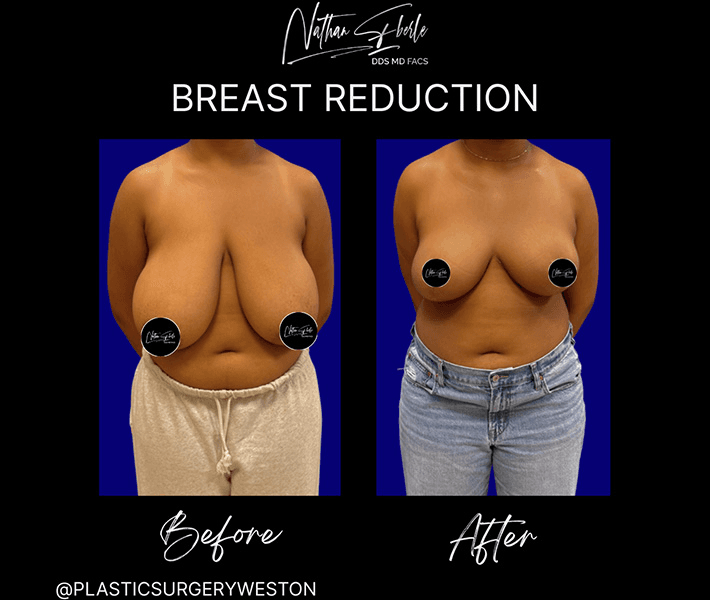
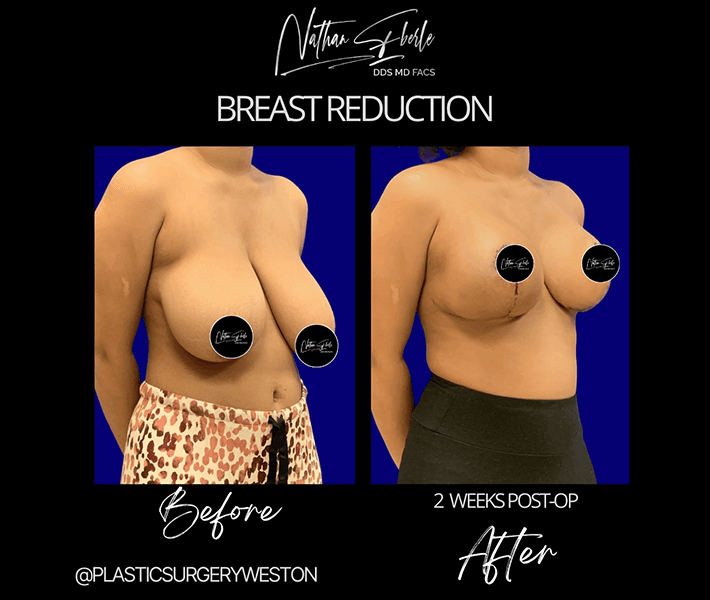
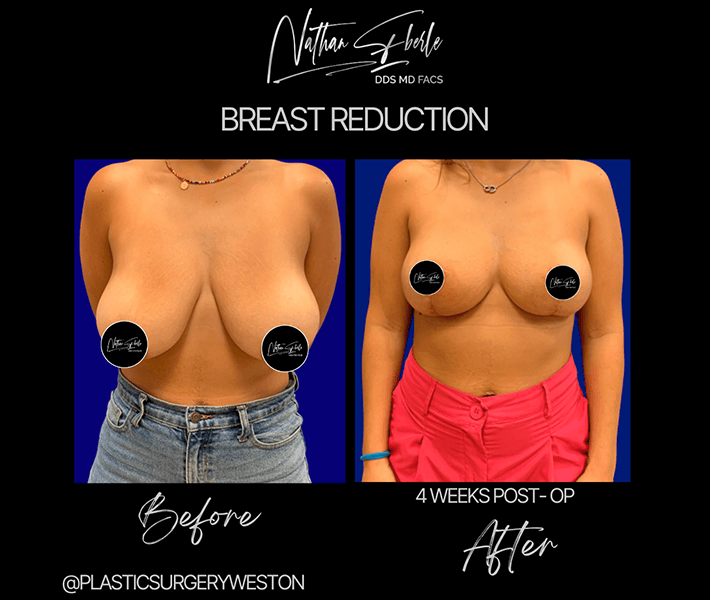
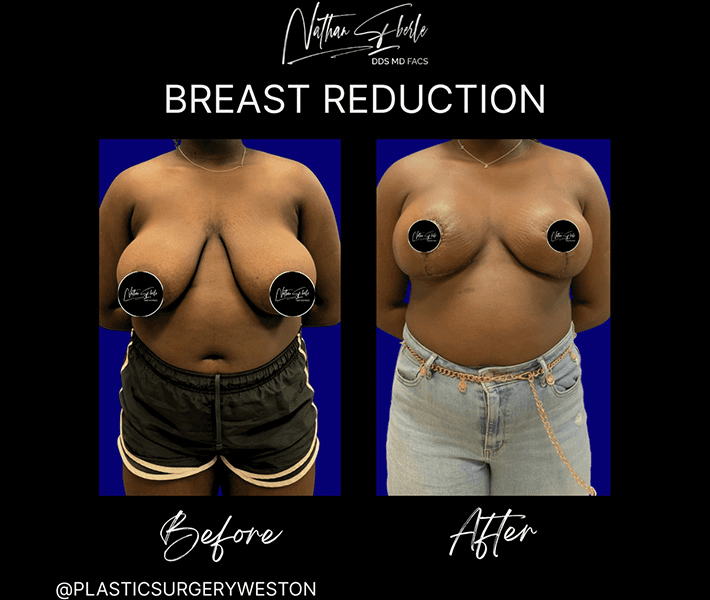
Actual patients of Dr. Eberle. Individual results may vary.

For many women, the daily weight of the breasts is the real problem, not just their appearance. Breast reduction is designed to relieve:
Patients also frequently describe feeling more comfortable and confident in their body after surgery. We cover this in more depth in Exploring the Benefits of Breast Reduction Surgery.
If the size of your breasts causes pain or limits how you live, or you simply want breasts that are smaller and better proportioned to your body, breast reduction may be right for you. Good candidates for reduction mammaplasty are adult women in good overall health, at a stable weight, who do not smoke and have realistic expectations for their results.
Because pregnancy and nursing can change the breasts, some women prefer to wait until they are done having children. That is a personal decision, and one worth talking through at a consultation with Dr. Eberle.
Breast reduction requires general anesthesia and 3 to 5 hours in the operating room, making it a fairly involved surgery. Incisions are made around the nipple and areola, usually continuing vertically down to the breast crease, and sometimes along the horizontal fold underneath each breast. The pattern Dr. Eberle recommends depends on your breast size, the degree of sagging, and how much tissue needs to be removed.
Excess breast tissue and skin are removed, and the remaining tissue is sculpted to give the breasts natural-looking contours. The nipple and areola are typically moved to a higher position on the breast, and the natural tissues lifted to counteract the long-term effect of gravity on large breasts. Sutures hold the incisions closed.
For a small number of patients whose fullness is mostly fatty tissue, liposuction alone may be enough to reduce breast size through much smaller incisions.

There are 3 different procedures that address heavy, sagging, or oversized breasts. Choosing between them comes down to what bothers you most.
Removes excess breast tissue, fat, and skin, then reshapes and lifts what remains. The only option of the 3 that meaningfully reduces breast weight.
Best when: Heaviness, pain, or bra-strap strain is the main concern.
Repositions and reshapes sagging breasts without significantly changing their size. Often combined with a reduction when size and sagging are both concerns.
Best when: Breast position, not weight, is the main concern.
Explore Breast LiftRemoves fatty tissue through much smaller incisions, without reshaping the breast or repositioning the nipple. An option for select patients whose fullness is mostly fat and whose skin has good elasticity.
Best when: A modest size reduction is enough and skin quality is good.
Explore LiposuctionStill weighing reduction against a lift? Dr. Eberle breaks the decision down in Breast Reduction vs. Breast Lift: Determining What’s Right for You.
A good decision is an informed one. These are the trade-offs Dr. Eberle walks every breast reduction patient through before surgery.
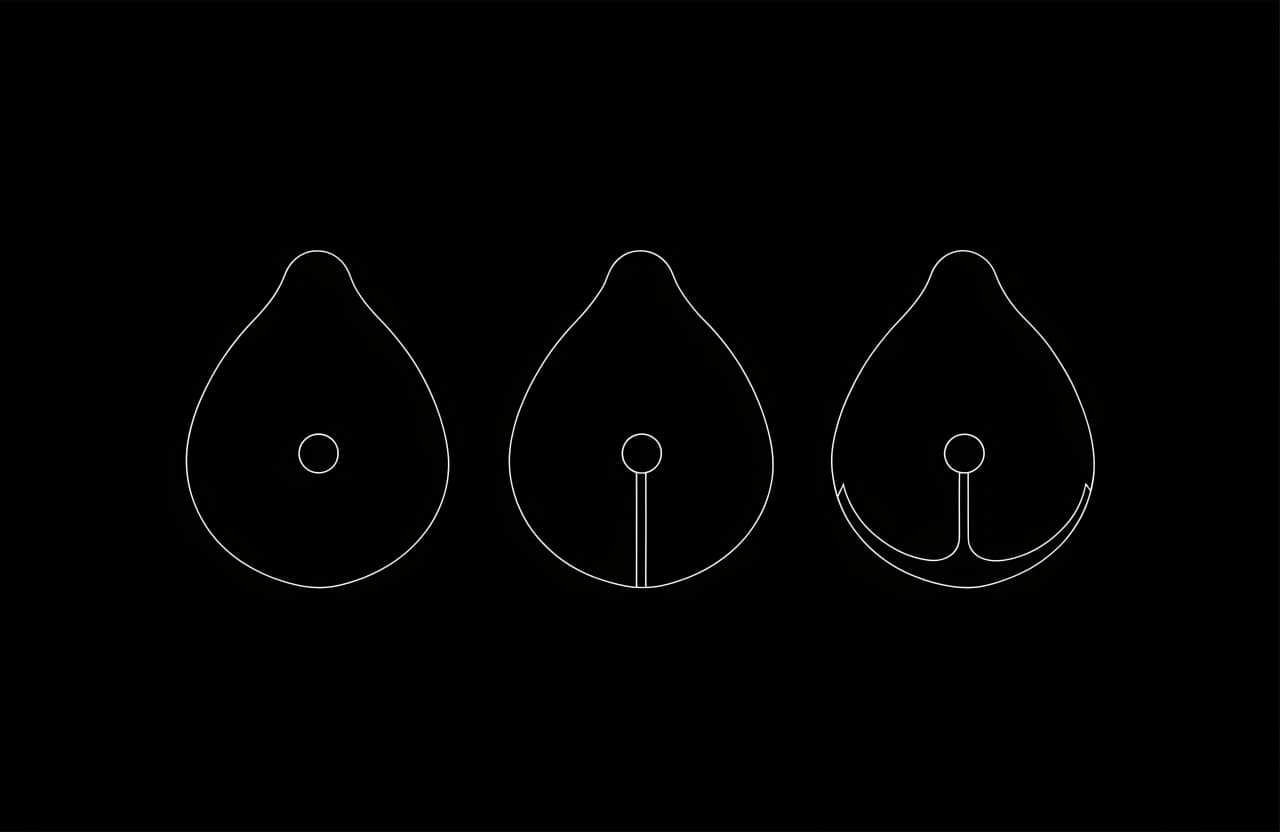
Every breast reduction leaves scars. Incisions typically circle the areola, run vertically down to the breast crease, and sometimes continue along the fold beneath the breast. The scars are permanent, but they sit where a bra or swimsuit top covers them, and most fade and flatten considerably over the first year of healing.
Temporary changes in nipple and breast sensitivity are common while the tissue heals. Sensation usually improves over time, though for some patients changes can be long-lasting. The risk depends partly on the technique used and how much tissue is removed, which Dr. Eberle will review with you before surgery.
Breast reduction removes glandular tissue and can affect milk production. Some women breastfeed successfully after a reduction, but it cannot be guaranteed. If you plan to have children, raise it at your consultation so it can shape the plan or the timing of your surgery.
As with any surgery, breast reduction carries risks, including bleeding, infection, delayed wound healing, asymmetry, and changes in sensation, along with the risks of general anesthesia. Dr. Eberle reviews your health history and walks through these risks with you in person before you decide.
Most patients take 1 to 2 weeks off from work. Strenuous activity and heavy lifting should be avoided for up to 2 months. A surgical bra or compression garment supports the breast tissue as it heals.



Rest is the priority. Tenderness, soreness, bruising, and swelling are normal, and a surgical bra or compression garment supports the breasts around the clock. Discomfort is managed with medication, and most patients are up and moving around the house within days.
Most women return to work within 1 to 2 weeks, depending on how physical the job is. Light daily activity resumes gradually, while strenuous exercise and heavy lifting stay off limits for up to 2 months. Swelling keeps improving, and temporary changes in nipple sensitivity begin to settle.
The final shape refines as residual swelling resolves, and scars gradually fade and flatten through their first year. Follow-up visits with Dr. Eberle track your healing along the way.
Rest is the priority. Tenderness, soreness, bruising, and swelling are normal, and a surgical bra or compression garment supports the breasts around the clock. Discomfort is managed with medication, and most patients are up and moving around the house within days.
Most women return to work within 1 to 2 weeks, depending on how physical the job is. Light daily activity resumes gradually, while strenuous exercise and heavy lifting stay off limits for up to 2 months. Swelling keeps improving, and temporary changes in nipple sensitivity begin to settle.
The final shape refines as residual swelling resolves, and scars gradually fade and flatten through their first year. Follow-up visits with Dr. Eberle track your healing along the way.
The cost of breast reduction varies significantly based on the volume and type of tissue removed and the amount of surgical sculpting performed, among other factors. You will receive a personalized quote after your consultation, once Dr. Eberle has examined you and built a surgical plan.
Weston Center for Plastic Surgery is a self-pay practice and does not accept medical or dental insurance, so the quote you receive is the number you plan around. Patients who wish to seek reimbursement from their own insurer are responsible for submitting their own claims.
Spread the cost of surgery with CareCredit, Cherry, or PatientFi. Plans and approval terms vary by provider; choose the option that fits how you want to pay.

Dr. Nathan Eberle, M.D., D.D.S., F.A.C.S., is a double board-certified plastic surgeon and oral and maxillofacial surgeon with more than 15 years of surgical experience. He completed his plastic and reconstructive surgery residency at Cleveland Clinic Florida, here in Weston, and is a Fellow of the American College of Surgeons.
Breast reduction is performed in the practice’s accredited in-office surgical facility, where the same team cares for you from consultation through follow-up. Learn more about Dr. Eberle or tour the surgical center.
Straight answers to the questions patients ask most before deciding on breast reduction.
The cost of breast reduction depends on the amount of tissue removed, the surgical plan, anesthesia, and facility time. Because every reduction is tailored to the patient's anatomy and goals, Weston Center for Plastic Surgery provides a personalized quote after your consultation with Dr. Eberle. Financing through CareCredit, Cherry, and PatientFi is available.
No. Weston Center for Plastic Surgery operates on a self-pay basis and does not accept medical or dental insurance. Patients who wish to pursue reimbursement from their own insurance provider are responsible for submitting and managing their own claims. Financing options are available to help spread out the cost of surgery.
A breast reduction removes excess breast tissue, fat, and skin to make the breasts smaller and lighter, and the remaining tissue is reshaped and typically lifted at the same time. A breast lift repositions sagging breasts without significantly changing their size. Women bothered primarily by the weight and volume of their breasts are usually better served by a reduction, while women happy with their size but not their breast position may only need a lift. Dr. Eberle will recommend the right approach at your consultation.
Some women are able to breastfeed after breast reduction, but the surgery removes glandular tissue and can affect milk production, so breastfeeding cannot be guaranteed. If you plan to have children or breastfeed in the future, tell Dr. Eberle during your consultation so it can be factored into the surgical plan or the timing of your procedure.
Temporary changes in nipple sensitivity are common after breast reduction and usually improve as the breasts heal. For some patients, reduced or altered sensation can be long-lasting. The likelihood depends in part on the surgical technique and the amount of tissue removed, which Dr. Eberle will review with you before surgery.
Incisions are typically placed around the areola, often continuing vertically down to the breast crease and sometimes along the fold beneath the breast. The resulting scars are permanent, but they are positioned so a bra or swimsuit top conceals them, and they typically fade and flatten considerably over the first year of healing.
Most patients take 1 to 2 weeks off from work. Strenuous activity and heavy lifting should be avoided for up to 2 months, and a surgical bra or compression garment supports the breasts while they heal. Swelling continues to settle and the final shape refines over the months that follow.
No surgeon can promise an exact cup size, because bra sizing varies between brands and every patient heals differently. Instead, Dr. Eberle plans the reduction around your frame, your goals, and how much relief you want from weight and volume, aiming for breasts that are proportionate to your figure.
The tissue removed during breast reduction is permanently removed, but pregnancy, natural aging, and weight changes can affect the remaining breast tissue and alter the size and shape of the breasts over time.
Dr. Eberle performs breast reduction in the accredited surgical facility at Weston Center for Plastic Surgery in Weston, Florida, serving patients from Fort Lauderdale, Broward County, and throughout South Florida.
Through breast reduction, women from Fort Lauderdale, Weston, and across Broward County can have breasts that are smaller, lighter, and more proportionate to the rest of their figure. Start with the before and after gallery, then book a consultation with Dr. Eberle to talk through your anatomy, your goals, and the surgical plan that fits both.
Discover the full range of surgical and non-surgical treatments tailored to your goals.
Schedule a private consultation with Dr. Eberle and take the first step toward results designed entirely around you.