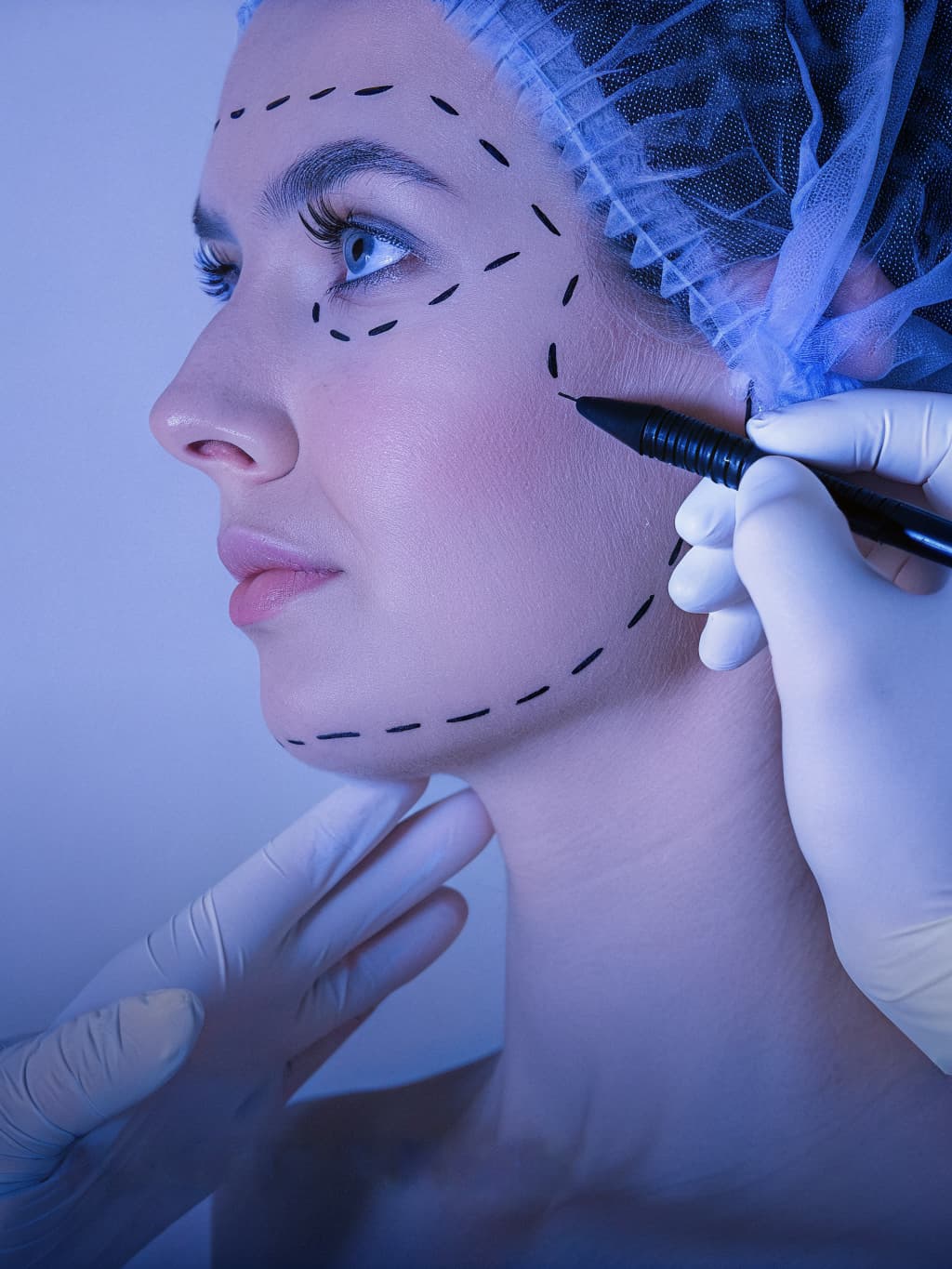
OrthognathicSurgery
Corrective jaw surgery realigns the jaws and teeth to improve chewing, breathing, speech, and facial balance. Dr. Eberle is a double board-certified plastic and oral & maxillofacial surgeon.
Why it's done
Jaw surgery may help to:
- 01
Make biting and chewing easier and improve chewing overall
- 02
Correct problems with swallowing or speech
- 03
Minimize excessive wear and breakdown of the teeth
- 04
Correct bite fit or jaw closure issues, such as open bite
- 05
Correct facial imbalance such as small chins, underbites, overbites, and crossbites
- 06
Improve the ability of the lips to close comfortably
- 07
Relieve pain caused by temporomandibular joint (TMJ) disorders
- 08
Repair facial injury or birth defects
- 09
Provide relief for obstructive sleep apnea
Risks
Jaw surgery is generally safe when done by an experienced oral and maxillofacial surgeon, often in collaboration with an orthodontist. Risks of surgery may include:
- Blood loss
- Infection
- Nerve injury
- Jaw fracture
- Relapse of the jaw to the original position
- Problems with bite fit and jaw joint pain
- Need for further surgery
- Need for root canal therapy on selected teeth
- Loss of a portion of the jaw
What you can expect
Before the procedure: Jaw surgery is performed by oral and maxillofacial surgeons. Surgery is usually done under general anesthesia. The surgery takes place in the hospital and requires a two- to four-day stay.
During the procedure: Surgery usually can be performed inside your mouth, so no facial scars show on your chin, jaw, or around the mouth. However, sometimes small incisions may be required outside your mouth. Your surgeon cuts the jawbone and moves it into the correct position. Once the jaw movement is completed, tiny bone plates, screws, wires, and rubber bands may be used to secure the bones into their new position.
Chin surgery (genioplasty)
A genioplasty can correct a small chin (deficient chin). A small chin often accompanies a severely receded lower jaw. Typically, surgeons can alter the jaw and restructure the chin during the same surgery. The surgeon cuts a piece of the chin bone on the front of the jaw, moves it forward, and secures it in a new position with plates and screws.
After the procedure
After surgery, your doctor will provide you with instructions. These instructions usually include what you can eat, oral hygiene, avoiding tobacco, avoiding strenuous activity, medications to control pain, and when to return to work or school, which is usually in one to three weeks.
Initial jaw healing typically takes about six weeks after surgery, but complete healing can take up to 12 weeks. After initial healing, your orthodontist finishes aligning your teeth with braces.
Results
Correcting the alignment of your jaws and teeth with jaw surgery can result in:
- Balanced appearance of your lower face
- Improved function of your teeth
- Health benefits from improved sleep, breathing, chewing, and swallowing
- Improvement in speech impairments
- Improved appearance and self-esteem
Our Procedures
Discover the full range of surgical and non-surgical treatments tailored to your goals.